5 Benefits of Working with a Local Print Company

5 Benefits of Working with a Local Print Company

In today’s digital age, it’s easy to assume that everything is better done online. However, there are still plenty of benefits to working with a smaller local print shop when it come to printing needs. In this blog post, we’ll explore some of the key advantages of working with a smaller print shop.


  1. Personalized Service

One of the biggest benefits of working with a smaller local print company is the personalized service that you receive.  Unlike larger print companies that prioritize high volume orders, smaller companies often focus on building relationships with their customers. This means that you’ll have direct access to the people handling your order, and they’ll be able to provide personalized recommendations and solutions based on your specific needs.


  1. Faster Turnaround times

Another advantage of working with a smaller print company is that they often have faster turnaround times. Usually, smaller companies are not dealing with the same high-volume orders as larger print shops, they can often get your order completed more quickly. Additionally, because you’re working directly with the people handling your orders, you can often communicate more effectively and get updates on your order status in real-time.


  1. Local Support

By working with a smaller print company, you’re also supporting your local community. Local businesses are an integral part of any community, and by choosing to work with them, you’re helping to strengthen your local economy. Additionally, local businesses are often more invested in their community and are more likely to give back through things like charitable donations and sponsorships.


  1. More Flexibility

Smaller print companies are often more flexible when it comes to customization and special requests. Custom sizes, special paper stocks and other unique printing needs can often be accommodated more easily with smaller print companies. Additionally, because you are working directly with the people handling your order, you can often negotiate pricing and other terms more effectively.


  1. Higher Quality

Finally, working with a smaller, local print company often means that you’ll receive a higher quality product. Smaller print companies are not mass producing orders, so they have more time to focus on details and ensure that your order is printed to the highest standard. Additionally, you’re working directly with the same one or two people, so you can provide direct feedback and make adjustments to ensure that the final product meets your expectations.


In conclusion, while online printing services may be convenient, there are still many benefits to working with a smaller local print shop. From personalized service to faster turnaround times to high quality products, choosing to work with a local print shop can be a smart choice for your printing needs. Additionally, by supporting your local print company, you’re helping to create a stronger and more vibrant local economy.

Learn More

5 Benefits of Print Marketing

5 Benefits of Print Marketing

Are you looking to expand your marketing efforts and maximize your ROI? Print marketing is an effective way to reach potential customers and drive conversions. While digital marketing is an important part of any successful marketing strategy, print marketing can be a powerful tool for businesses of all sizes.

Here are five benefits of print marketing that you should consider for your next campaign:

  1. Print Marketing is Tangible:

In today’s digital world, it can be easy to forget about the power of print marketing. But tangible materials, like postcards, brochures, catalogs and flyers, can create a lasting impression with potential customers. They also provide a physical connection to your business, which is something that digital marketing can’t.


  1. Print Marketing is Targeted:

Print marketing allows you to target specific audiences, which is critical for any successful marketing campaign. You can target specific geographic areas, demographics, or interests with precision and accuracy. This allows you to create a more personalized message that resonates with your target audience.


  1. Print Marketing is Cost-Effective:

Print marketing is one of the most cost-effective ways to reach potential customers. Compared to other types of marketing, it’s relatively inexpensive, which makes it a great option for small businesses and startups. Plus, you can track the effectiveness of your print marketing campaigns using metrics like response rates and conversions.


  1. Print Marketing is Versatile:

Print marketing is incredibly versatile, which means that you can use it in a variety of ways. You can use it to create awareness, drive sales, or even launch a new product. You can also use it to reinforce your brand identity and create a stronger connection with your customers.


  1. Print Marketing is Measurable:

Another great benefit of print marketing is that it’s measurable. You can track the effectiveness of your print campaigns using metrics like response rates, conversion rates, and ROI. This allows you to identify what’s working and what’s not so that you can adjust your strategy accordingly.

Print marketing can be a powerful tool for businesses of all sizes. It’s cost-effective, targeted, and measurable, which makes it a great option for any marketing strategy. So if you’re looking to expand your marketing efforts and maximize your ROI, consider adding print marketing to your strategy.

Reasons Why Your Direct Mail Campaign Did Not Work

Reasons Why Your Direct Mail Campaign Did Not Work

Have you heard that direct mail campaigns are the best return on investment than any other form of direct marketing? You tend to get more readers, more people responding to your call to actions, and the biggest bang for your buck. All that said, have you sent out some postcards or catalogs and not gotten the results you had hoped for? Check out our list below of some things that could be holding you back from some of those great results.

  1. Target Market:

Sending to the correct target market is the key to getting great results. You wouldn’t send a new child dentist announcement to a community of retiree’s, right? Make sure when creating or asking for a list, you have really homed in on the type of people and businesses you want to react to your mail piece. Looking for help on the best list? We can help!

  1. Compelling Offer:

Did you look over your list criteria meticulously and you still didn’t get the reaction you wanted? This could all come down to your offering or lack thereof. You need to make sure that your offer for people to act is compelling enough to actually make them act. Maybe you need to provide a steeper discount, offer a product for free, or give a longer or shorter timeline for someone to act.

  1. Poor Printing:

Although there are certainly ways to save on paper and other printing costs, make sure you are not going to cheapest route possible. Remember that you are representing your brand with your postcards, brochures, catalogs, and other direct mail pieces. The paper, patterns, colors and logos should be consistent across your brand and the image you are trying to portray.

  1. Setting Goals:

How can you track goals if you don’t have any set in the first place? Although it may sound obvious, be sure to have some sort of goal in mind before sending out that first direct mail piece. Don’t know where to start? We can help! Your goals should be tracked so you can see where you started, and where you ended up. Don’t have enough time to track? We can help with that too!

  1. Consistent Mailing:

Still waiting to see those results? Don’t worry! If you’ve only sent out one piece, you can’t expect success overnight! You need to make sure you are consistent with your mailing and getting the word out there. Be sure to make sure you stay on a schedule, and track the results accordingly. The more a company or individual sees your brand and offerings, the more likely they are to remember it and look you up when they are ready to buy!


Check out more of our tips and tricks on direct mail marketing and other business printing. Did you know we offer promotional products, apparel and vehicle wraps as well?

How We Can Help You Go Green

How We Can Help You Go Green

Looking for ways to go green, while still getting your message out there? We can help! From direct mail campaigns to environmentally friendly paper and inks, we are here to help every step of the way. Check out some tips below on just a few of the ways we can help you go green!

Mail invitations directly from us:

Did you know we can help with direct mailing? All we need is you list (or we can provide for you) and you’re all set! How does this help go green? One less delivery for us, one less thing on your to do list. Let us take the burden off you of having to go to the post office to mail everything out, ‘cause we are already going there. Plus, we may be able to help save you money on bulk postage rates!


Electronic proofs:

Electronic proofs are standard with all our jobs. We are happy to provide a hard copy proof, but delivery and mailing put stress on the environment with every step of the way. You will be able to see and fix any glaring mistakes, all from the comfort of your office or home. While the colors will not match exactly (colors on screen are different than on paper), they are similar enough that you will be able to spot any big mistakes.


Eco-Friendly Inks & Paper

Paper Facts: Paper is biodegradable and unlike water bottles, cell phones, computers and other electronic devices, it decomposes in a landfill.

Paper is made from cellulose fiber – that can come from pulped wood, rags, cotton, grasses, sugar cane, rice and waste paper. An estimated 4 million trees are planted daily and due to reforestation, forests in the U.S. have actually grown over the past century.

Paper is recyclable – 37% of the U.S. pulp is produced from recovered paper. Most recovered paper is used to make new copy and writing paper, as well as corrugated boxes, fruit cartons, egg cartons and wall insulation.

Ink – we use soy based inks that are compatible with the environment. This means less harsh chemicals in the environment and on your printed materials.


Economy Growth:

The forest products industry accounts for about 6% of the total us manufacturing output and employs more than one million people. It ranks among the top 10 manufacturing employers in 42 states. There are almost 175,000 establishments in this segment that employ over 2.9 million people. For comparison, the auto manufacturing industry only employs about 1.2 million


Efficiency:

Did you know that reading something on paper is 20-30% faster than reading something on a screen? Reading from paper results in deeper understanding of text and most end users prefer it. People are more likely to visit your store and buy something from a direct mail campaign then a simple email. If they can see it, touch it and read it, you have a bigger ROI than a simple email, which according to a survey, 80% of receivers automatically delete before ever opening the email.


Looking for more facts and ways to reach more customers? Check out some of our tips and tricks here and here.


References:

Whattheythink.com


Learn More

Paper Grades and Weights

Paper Grades and Weights

Paper Grades and Weights

Have you ever heard someone refer to the weight of a piece of paper? When getting printing quotes, do you call out what kind of paper you want, or do you leave that up to the printer to determine? There is no right or wrong answer, but see our tips below on typical paper weights, grades and uses.

Paper Grades:

Bond paper – most commonly used for letterhead, business forms and copying. Weights usually range from 20lb for copying or 24lb for stationary.

Text weight paper – most common in printing. This is typically high quality paper with some surface texture. Text paper can be coated or uncoated and weights are typically 60, 70, 80 or 100

Cover weight paper – used with creative business cards, postcards and booklet covers. These again can be uncoated or coated and weights are usually 65, 80 or 100.

Paper Weights:

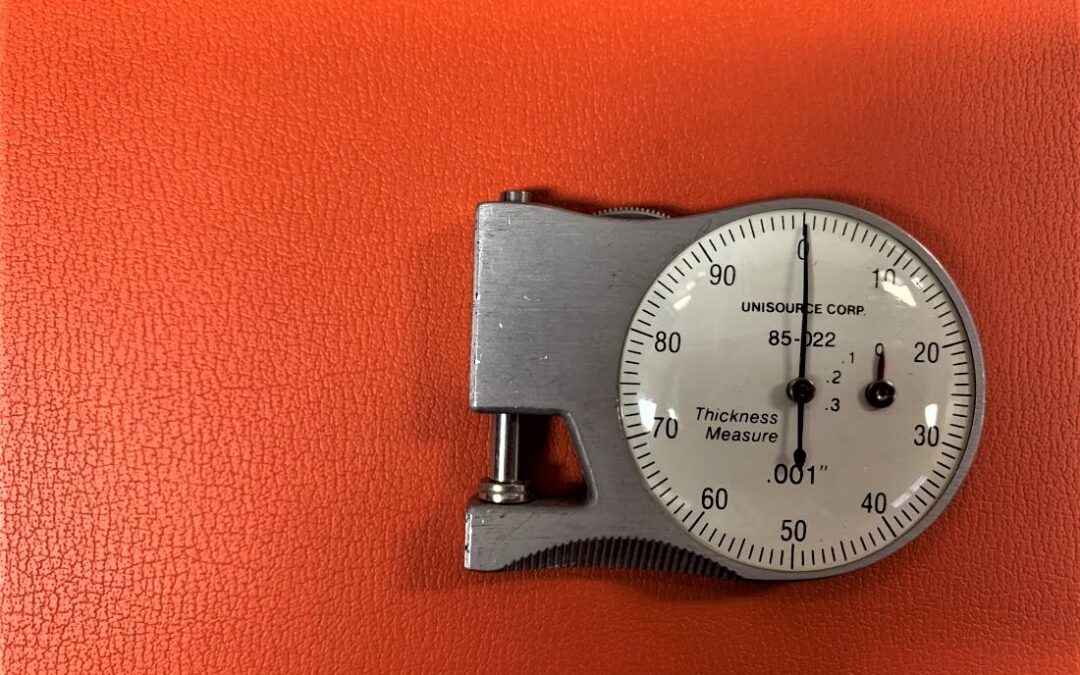
Paper weights are based on the weight (in pounds) of 500 standard sized sheets of paper. While there are many different terms and names to call out paper, there are some typical names across brands and companies. You can have a text or cover paper grade, with a same weight, that are not the same type of paper. For example, a 60lb text and a 60lb cover are two different types of paper.

Note that just because someone says “65lb” paper, they are not specifying the type of paper. Paper types need to be called out not only by weight, but also type. For example, “60lb text” or “100lb cover” are what you would see. Often times you can get even more fine tuned with saying “80lb cover uncoated”


Check out our articles here and here for more about uncoated vs. coated stock and more fun facts about paper!